
Fingerroot vs Krachai vs Chinese Ginger is a common point of confusion for shoppers, cooks, gardeners, and readers trying to identify the right herb. The short answer is this: in most cases, fingerroot, krachai, and Chinese ginger refer to the same plant, Boesenbergia rotunda. The confusion happens because the herb moves across languages, local food traditions, online marketplaces, and herbal naming habits. Once sellers start mixing in terms like Chinese keys or lesser galangal, many people are no longer sure what they are actually buying.
This article gives a clean, practical answer. You will see which names usually match, where mistakes happen, how fingerroot differs from galangal and common ginger, and what to check before buying fresh rhizomes, dried pieces, powders, or supplements. If your goal is simple disambiguation, this is the part that matters most: fingerroot and krachai are usually the same herb, while “Chinese ginger” is often used for the same plant but is less precise and more likely to create confusion.
Quick answer: are fingerroot, krachai, and Chinese ginger the same herb?
Usually yes. In most culinary and plant-identification contexts, fingerroot and krachai point to Boesenbergia rotunda. The name Chinese ginger is also often used for the same herb, but it is a less reliable label because it sounds broader and can be interpreted in different ways by different sellers or readers.
The safest conclusion is:
| Name | Usually refers to | Reliability of the label |
|---|---|---|
| Fingerroot | Boesenbergia rotunda | High |
| Krachai | Boesenbergia rotunda | High |
| Chinese ginger | Often Boesenbergia rotunda | Medium |
If you want certainty, check the botanical name. That matters more than any common name on the front of the package.
What is fingerroot exactly?
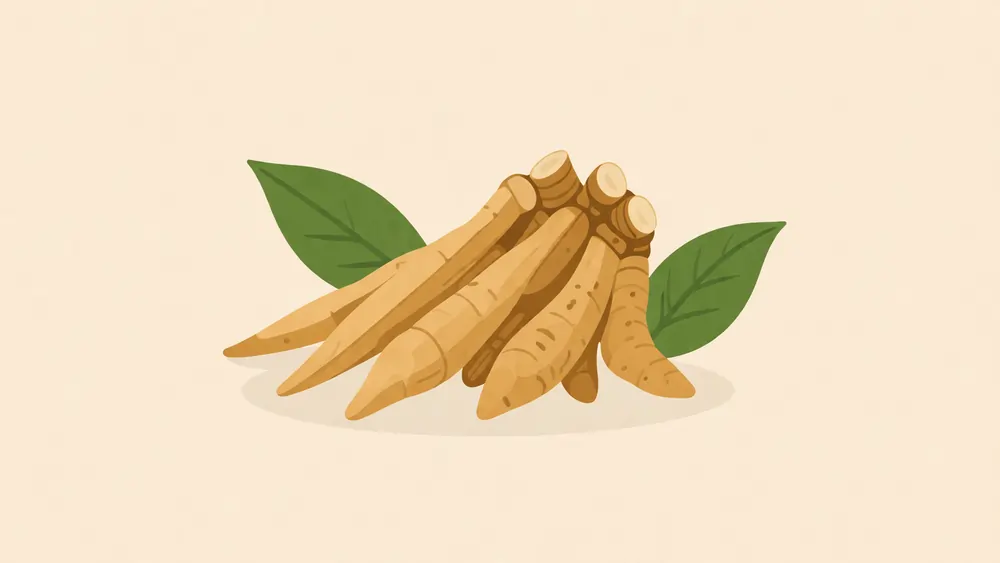
Fingerroot is a rhizomatous plant in the ginger family, Zingiberaceae. Its underground stems grow in long narrow sections that look like fingers, which explains the English common name. It is widely used in Southeast Asian cooking, especially in Thai and Indonesian dishes, and is known for a sharp, aromatic, earthy profile that differs from standard culinary ginger.
Main identity markers
The plant is commonly identified as Boesenbergia rotunda. It belongs to the same broad family as ginger, turmeric, and galangal, but it is not the same species as any of them. That family connection explains why many product listings borrow familiar ginger-related language even when it reduces precision.
Why the name causes confusion
The word fingerroot is descriptive, not scientific. It tells you what the rhizome looks like, not exactly where it fits botanically. That opens the door to vague labeling. In online stores, the plant may be sold under a culinary name, a regional name, a translated name, or a nickname copied from another seller. Once that happens, one herb can appear under four or five labels.
What does krachai mean?
Krachai is a common Thai name for fingerroot. In practice, if you see krachai in a Thai food context, it almost always means the same plant as fingerroot: Boesenbergia rotunda. This is one of the least confusing name pairs in the whole topic.
Why krachai is often more precise than Chinese ginger
Krachai is tied to a specific culinary tradition. Because of that, the term tends to stay attached to the correct herb more consistently. Chinese ginger, by contrast, sounds generic. It can be copied into product titles by people who want a more familiar search term, even when the label is not ideal.
Why is fingerroot sometimes called Chinese ginger?
Fingerroot is sometimes marketed as Chinese ginger because sellers assume buyers will recognize the word ginger more easily than fingerroot or krachai. This is a naming shortcut, not a botanical upgrade. It may help with search visibility, but it also creates ambiguity. A shopper may think the product is a type of common ginger or a direct substitute for regular ginger, which is not accurate.
What this label gets right
It usually points toward the ginger family and often toward fingerroot itself. In that narrow sense, it is not always wrong.
What this label gets wrong
It blurs important distinctions between species. Fingerroot is not the same as standard ginger, and the phrase Chinese ginger does not clearly communicate the plant’s botanical identity. That makes the label weaker for accurate comparison, cooking substitution, or product research.
Is fingerroot the same as lesser galangal?
No. This is one of the biggest naming mistakes around this herb. Fingerroot is not the same plant as lesser galangal. They belong to the same family, but they are different species and should not be treated as identical.
| Feature | Fingerroot | Lesser galangal |
|---|---|---|
| Common botanical reference | Boesenbergia rotunda | Usually Alpinia officinarum |
| Shape | Long, narrow, finger-like rhizomes | More compact rhizome pieces |
| Common use context | Southeast Asian cooking | Culinary and traditional herb markets |
| Interchangeable? | No | No |
If a product page uses fingerroot and lesser galangal as if they were the same, treat that listing carefully. It may signal weak sourcing or copied content.
How is fingerroot different from common ginger?
Fingerroot and common ginger are related, but they are not the same herb. Common ginger usually refers to Zingiber officinale. Fingerroot refers to Boesenbergia rotunda. They differ in species identity, appearance, flavor, and culinary role.
Species and naming
Common ginger and fingerroot sit in the same family, but they are separate plants. That means one should not automatically replace the other in a recipe or a product search.
Flavor and kitchen use
Common ginger is more familiar, broader in use, and easier to find worldwide. Fingerroot has its own aroma and flavor profile and is valued in specific regional dishes. If a recipe calls for krachai or fingerroot, using regular ginger may change the result noticeably.
Buying implications
If the package says Chinese ginger without a botanical name, you still need one more check. Do not assume it means standard ginger. It may still be fingerroot.
How can you tell whether a product is really fingerroot?
Start with the botanical name. That is your best filter. Then move to the product form, photo, and seller language.
Best signs of a correct match
- The label includes Boesenbergia rotunda.
- The rhizome is shown as slim, finger-like segments.
- The listing uses fingerroot and krachai together without mixing in unrelated species.
- The seller describes culinary use in Southeast Asian dishes.
Warning signs
- The listing treats fingerroot and lesser galangal as exact synonyms.
- The label uses only Chinese ginger with no botanical name.
- The product title is overloaded with too many species names.
- The photos look like standard ginger or a very different rhizome shape.
Checklist: how to avoid buying the wrong herb
- Check for the botanical name Boesenbergia rotunda.
- Look for fingerroot or krachai before trusting Chinese ginger alone.
- Compare product photos with the thin finger-like rhizome shape.
- Avoid listings that collapse fingerroot and lesser galangal into one herb.
- Read the ingredients panel, not just the product title.
- Use recipe context. Thai curry and Southeast Asian dish references often support a correct identification.
- Be extra careful with powders and capsules, where the shape is no longer visible.
Which name should you use in your own writing or product content?
If clarity matters, use fingerroot first, then add krachai as the regional equivalent. That gives readers both a familiar English label and a precise culinary term. Use Chinese ginger only as a secondary variant, not as the main label, because it is more likely to blur the identity of the herb.
Best format for clarity
Fingerroot, also called krachai, is generally the cleanest phrasing for informational content. It is readable, searchable, and more precise than relying on Chinese ginger alone.
When botanical naming matters most
Use the botanical name when you are writing a comparison article, labeling a product, creating a glossary, or explaining substitutions. That is the easiest way to reduce user confusion and improve trust.
Can fingerroot, krachai, and Chinese ginger be treated as full synonyms in every case?
No. Fingerroot and krachai are close working synonyms in most real-world usage. Chinese ginger is often used for the same herb, but not with the same level of reliability. It is better to think of Chinese ginger as a common alias that needs confirmation, not as a perfect one-to-one synonym.
Practical rule
If you are reading or writing educational content, treat fingerroot and krachai as the strongest pair. Treat Chinese ginger as a probable match that should still be verified with species information.
FAQ about Fingerroot vs Krachai vs Chinese Ginger
Is fingerroot the same as krachai?
Yes. In most culinary and botanical contexts, fingerroot and krachai refer to the same plant, Boesenbergia rotunda.
Is Chinese ginger always fingerroot?
No. It often refers to fingerroot, but the label is less precise and should be verified.
Is fingerroot the same as common ginger?
No. Fingerroot and common ginger are different species in the same plant family.
Is fingerroot the same as lesser galangal?
No. They are different plants and should not be treated as exact synonyms.
What is the botanical name of fingerroot?
The name most commonly associated with fingerroot is Boesenbergia rotunda.
Which label is safest when buying?
The safest label is the botanical name, supported by a clear ingredients panel or product description.
Why do sellers use several names in one title?
Usually to capture more search traffic. That may help visibility, but it can reduce accuracy.
Glossary
Fingerroot
A common English name for Boesenbergia rotunda, based on the shape of the rhizome.
Krachai
A Thai name commonly used for fingerroot.
Chinese ginger
A less precise common label that is often used for fingerroot but can create confusion.
Boesenbergia rotunda
The botanical name most often linked to fingerroot and krachai.
Rhizome
An underground plant stem that stores energy and produces new growth.
Zingiberaceae
The ginger family, which includes ginger, turmeric, galangal, and fingerroot.
Lesser galangal
A different plant from fingerroot, often confused with it in low-precision listings.
Botanical name
The scientific species name used to identify a plant more accurately than a common name.
Conclusion
Fingerroot and krachai usually mean the same herb, while Chinese ginger often points to the same plant but needs more caution. If you want the cleanest answer, trust the botanical name first and treat common names as helpful, but not always exact, guides.
Used Sources
Botanical reference and accepted plant naming details, Plants of the World Online — powo.science.kew.org
Taxonomic and species reference for Boesenbergia rotunda, World Flora Online — worldfloraonline.org
General medicinal plant and species overview, CABI Digital Library — cabidigitallibrary.org
Culinary and regional naming context for fingerroot and krachai, specialty food reference materials — various reputable culinary references
About the Author