
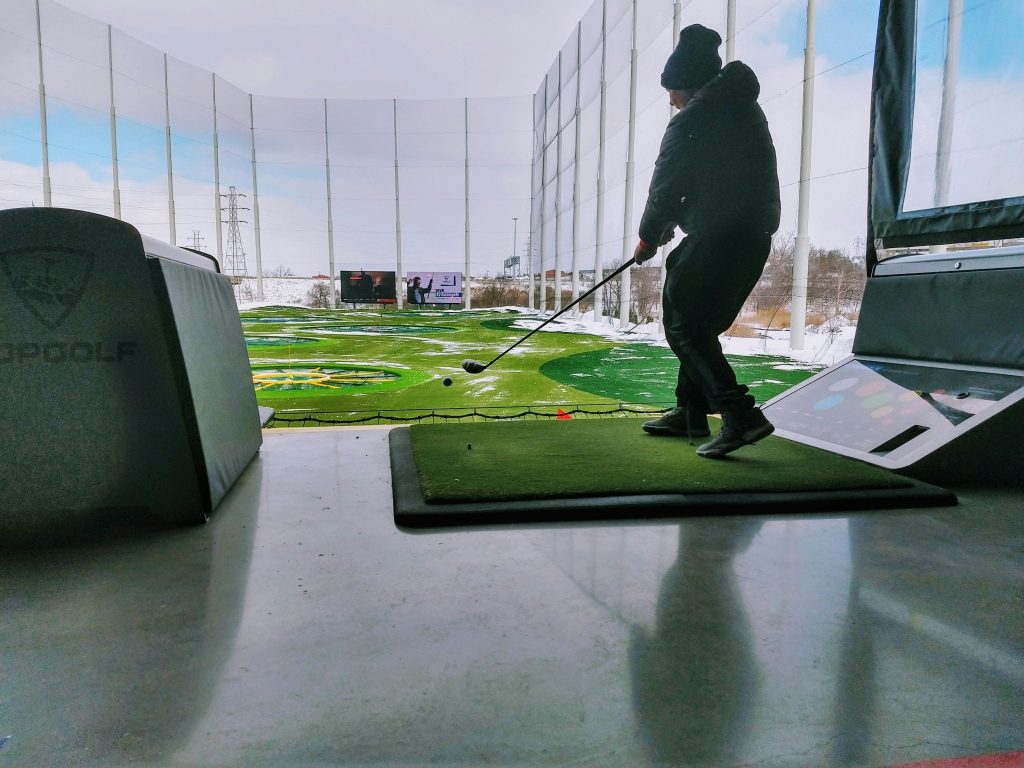
For decades, the “third place”—that essential social environment outside of home (the first place) and work (the second place)—was defined by the local coffee shop, the neighborhood pub, or the shopping mall. However, as urban landscapes shift and the digital native generations seek more meaningful, active, and tech-integrated ways to connect, a new contender has emerged: the indoor golf lounge. No longer reserved for the elite or the retirement crowd, golf is undergoing a massive cultural rebranding. Many players who become interested in simulator golf at commercial lounges eventually start exploring high-tech golf simulators for their own homes, allowing them to practice year-round while recreating the immersive indoor golf experience with professional-grade tracking, realistic course play, and advanced swing analytics.
The rise of these venues is not accidental. It represents a convergence of several modern desires: the need for year-round activity, a preference for gamified experiences, and a rejection of the stuffy, exclusionary traditions of the past. As younger generations look for spaces that offer more than just a place to sit, the indoor golf lounge provides an immersive environment where sport meets lifestyle, creating a community-focused sanctuary that fits perfectly into the modern social calendar.
Breaking the Barriers of Traditional Golf
To understand why indoor golf is booming, one must look at why traditional golf was struggling with younger demographics. Outdoor golf is often time-consuming, expensive, and weather-dependent. For a generation that values efficiency and flexibility, spending five hours on a Saturday under a strict dress code isn’t always appealing. Indoor lounges strip away these barriers. They offer a “compact” version of the sport where a full 18 holes can be played in half the time, all within a climate-controlled setting that doesn’t care if it’s raining or snowing outside.
Furthermore, the atmosphere in these lounges is a far cry from the quiet, often intimidating hush of a private country club. Music is playing, the lighting is moody and modern, and the focus is on fun rather than etiquette. For many Gen Z and Millennial players, the indoor lounge serves as a low-pressure entry point to the sport. It’s a place where you can swing a club for the first time without the fear of holding up a group of seasoned veterans behind you on the tee box.
The Power of Gamification and Technology
Gen Z and Millennials grew up with technology integrated into every facet of their lives, and they expect their social spaces to follow suit. Modern indoor golf lounges utilize state-of-the-art launch monitors and simulators that turn a physical swing into a digital event. These systems provide instant feedback, tracking ball speed, launch angles, and spin rates with surgical precision. This data-driven approach appeals to a generation that loves “quantified self” metrics and gaming.
Beyond the data, the variety offered by simulators is a major draw. In a single evening, a group of friends can “travel” from the iconic links of St. Andrews to the lush fairways of Pebble Beach. For those looking to improve their game in a more structured way, many of these venues also offer access to high-quality gear. Enthusiasts often look for the best golf mats to replicate the feel of a real fairway, and finding that same quality in a commercial lounge ensures that the transition from the simulator to the real grass is as seamless as possible.
A New Anchor for Social Connection
The concept of the “third place” relies heavily on the idea of a “leveler”—a space where people can gather regardless of their status. Indoor golf lounges achieve this by blending different social elements. You might find a group of corporate professionals networking in one bay, a couple on a first date in another, and a league of serious amateurs in a third. Unlike a movie theater where you sit in silence, or a loud nightclub where conversation is impossible, golf lounges encourage interaction.
The layout of these spaces is intentionally designed for socializing. Comfortable sofas, communal tables, and high-end food and beverage programs make the “waiting” part of the game just as enjoyable as the playing. For Millennials, who are often accused of “killing” various industries, they aren’t killing golf; they are simply moving it indoors. They are trading the expensive memberships of the past for pay-per-hour bays that offer a better return on social investment.
Accessibility and Year-Round Improvement
One of the biggest drivers of the indoor golf trend is the ability to maintain a hobby regardless of the season. In many parts of the world, golf is a seasonal sport, leading to a “rustiness” that sets in over the winter months. Indoor lounges provide a solution for the dedicated golfer who wants to keep their swing in peak condition year-round. This has led to a surge in interest for supplemental tools that players can use at home or in the lounge.
Serious players who frequent these lounges are often the same ones searching for the best golf training aids to refine their mechanics between social sessions. The lounge becomes a testing ground for the skills they develop during their solo practice. Because the environment is so accessible, the “barrier to mastery” is lowered. You don’t need to wait for a weekend with perfect weather to work on your game; you just need to book a bay after work.
The “Vibe” Economy and Aesthetic Appeal
We cannot ignore the role of aesthetics in the “third place” of 2026. Gen Z and Millennials are heavily influenced by the “vibe” of a location—how it looks on social media and how it feels to be there. Indoor golf lounges are often designed with high ceilings, industrial-chic decor, and neon accents that are perfectly “Instagrammable.” This aesthetic appeal helps the sport shed its “old man” image and positions it as a lifestyle choice.
The inclusivity of these spaces also extends to how they cater to different skill levels simultaneously. While one person in the group might be a scratch golfer, another might be there just for the cocktails and the atmosphere. The “gamified” versions of golf—like hitting targets or playing virtual “capture the flag”—allow everyone to participate. It is this versatility that makes the indoor lounge a more robust “third place” than a traditional bar, which offers little in the way of shared activity.
The Future of the Urban Social Landscape
As remote work remains a staple for many, the need for a physical “third place” to escape the home office has never been higher. Indoor golf lounges are filling the void left by declining traditional malls and the “retail apocalypse.” They are becoming anchor tenants in urban developments, drawing foot traffic and creating a sense of community in concrete jungles.
Many enthusiasts who start their journey in these lounges eventually want to bring a piece of the experience home. For those living in urban apartments, finding the best indoor putting green becomes a way to keep the “third place” spirit alive in their “first place.” This synergy between commercial lounges and home practice setups is creating a more dedicated and skilled generation of golfers than ever before.
Ultimately, the rise of the indoor golf lounge as the new third place is a testament to the evolving priorities of Gen Z and Millennials. They want spaces that are inclusive, tech-forward, and active. They want to compete, but they also want to relax. By successfully merging the precision of a professional sport with the relaxed vibe of a modern lounge, indoor golf has secured its spot as the premier hangout for the next generation. Whether you’re there to shave points off your handicap or just to share a pizza with friends, the “fairway lounge” is officially the place to be.
About the Author
Jordan Fuller is a golf expert and mentor with decades of experience. He provides professional advice on equipment and techniques to help players improve their game.
About the Author