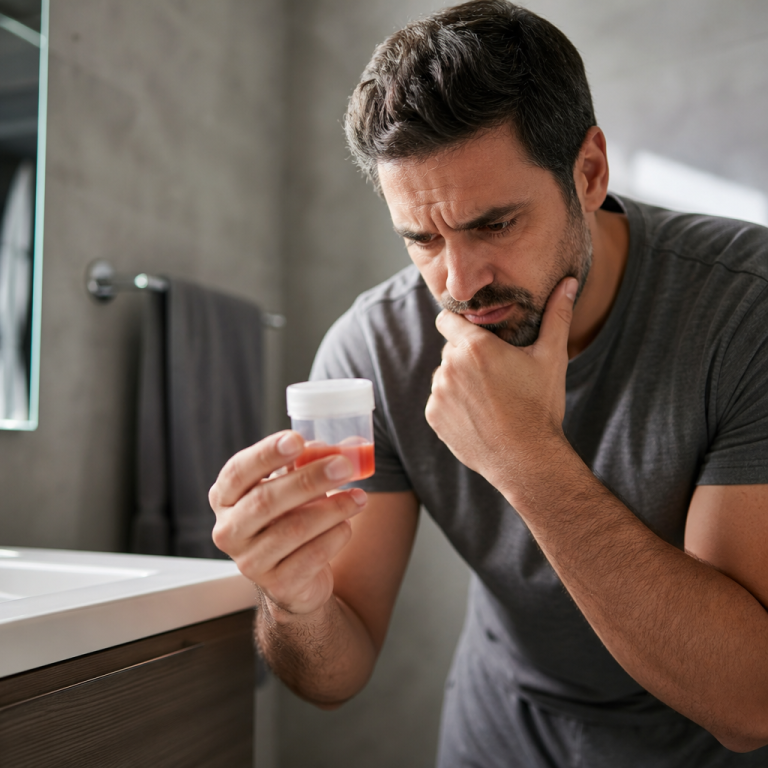
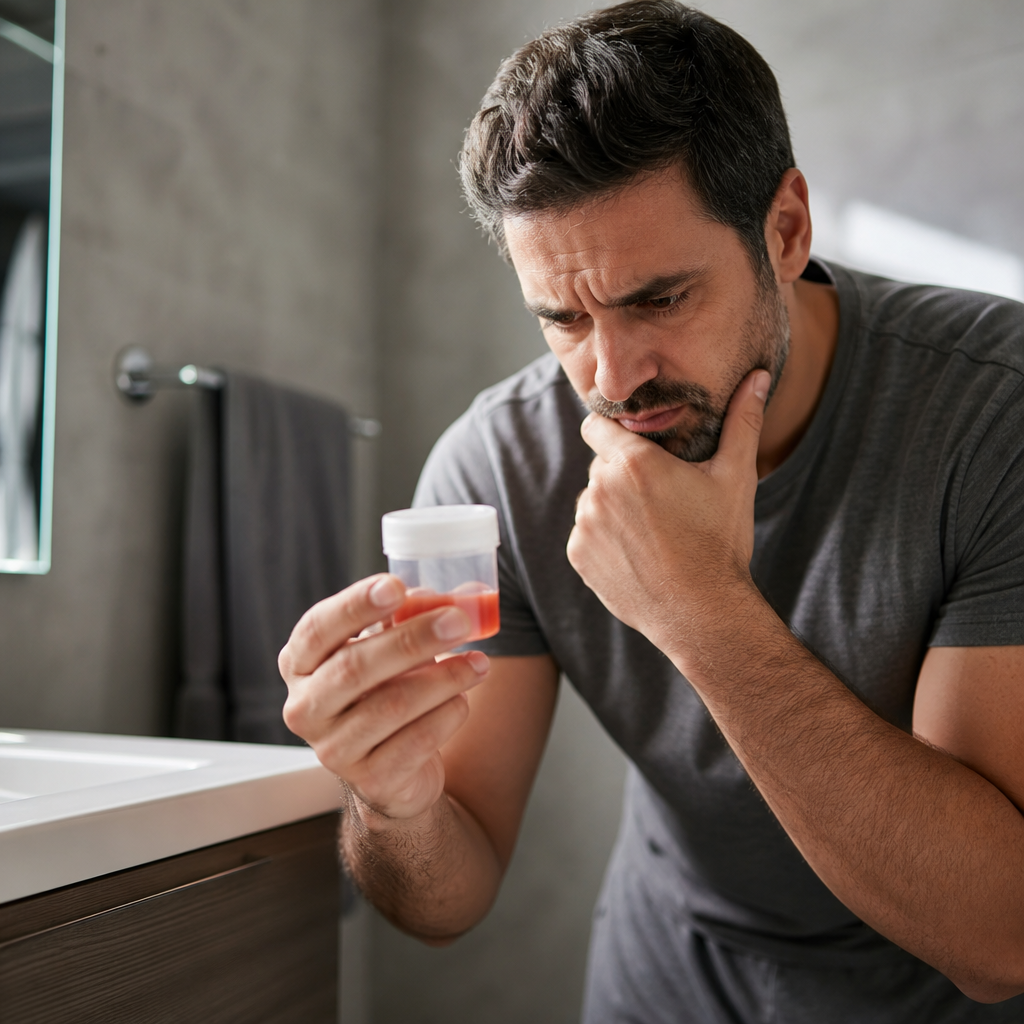
Most men who notice pink or rust-coloured urine tell themselves a story about it. They blame beetroot, a hard gym session, a long-haul flight, dehydration, or the painkillers they took for a bad back. Then the urine runs clear again for three weeks and the story holds. That pattern — visible blood that comes and goes without pain — is the single most common first sign of bladder and urothelial cancer, and the intermittent nature of it is exactly why it gets ignored for months.
This article is about the cancers that sit in the male urinary and reproductive tract: bladder and urothelial, prostate, and testicular. They behave very differently, they are found in different ways, and the treatment conversations around them have changed considerably in the last decade. What they share is a dependence on timing. A tumour confined to the lining of the bladder is a different clinical problem from one that has pushed into the muscle wall, and the gap between those two situations can be a matter of months of delay.
What “urothelial” actually means
The urothelium is the specialised lining that runs from the renal pelvis in the kidney, down the ureters, through the bladder, and into part of the urethra. Because it is one continuous tissue type, a cancer that starts in that lining is called urothelial carcinoma wherever it appears — most often in the bladder, less often in the upper tract. This is also why bladder cancer is treated as a field disease rather than a single lump: if one patch of lining has turned, other patches are at risk, which is why follow-up involves repeat inspection of the bladder for years rather than a single all-clear.
Symptoms worth a same-week appointment
- Visible blood in the urine, even once, even painless, even if it clears up
- Blood detected on a routine urine dipstick when you have no infection
- New urinary urgency, frequency or burning that antibiotics do not fix
- Flank or lower back pain on one side with urinary changes
- Recurrent “cystitis” in a man — uncommon enough to deserve investigation
Risk factors you can act on
Smoking is the dominant modifiable risk for urothelial cancer, because carcinogens from tobacco are filtered by the kidneys and then sit in contact with the bladder lining while the bladder fills. The risk is dose-related and it falls after quitting, though not immediately to baseline. Occupational exposure matters too: aromatic amines and certain dyes and solvents used in painting, printing, rubber, leather and metalworking carry documented risk, and men who worked around them decades ago are still in the window. Chronic bladder irritation, long-term catheter use and some prior pelvic radiotherapy also raise risk.
Prostate cancer risk runs on different rails — age, family history, and ancestry carry more weight than lifestyle, though metabolic health affects how aggressively some tumours behave. Testicular cancer is the outlier: it is the most common solid cancer in men between roughly 15 and 40, risk is linked to undescended testis and family history, and there is no behaviour that reliably prevents it. What helps is familiarity. Knowing the normal shape, weight and texture of your own testicles makes a new firm lump, a dragging ache or a change in size easy to spot early, and early-stage disease is highly treatable.
How these cancers are actually diagnosed
For suspected bladder or urothelial disease, the central test is cystoscopy — a thin camera passed into the bladder, usually under local anaesthetic, to look directly at the lining. It is paired with urine cytology and cross-sectional imaging of the kidneys and ureters, because the upper tract has to be cleared as well. If something suspicious is seen, tissue is removed and graded, and the critical question is whether the tumour has invaded the muscle layer.
Prostate assessment now typically runs PSA blood testing alongside MRI before any biopsy, so that needles are aimed at suspicious areas rather than taken blindly. Testicular evaluation is faster and simpler: examination, scrotal ultrasound, and blood tumour markers, often completed within days. Diagnostic sequences differ between health systems and between schools of practice, which is one reason patients encounter varying styles of care — the distinction between conventional and osteopathic approaches to medical training and practice is a useful example of how two legitimate traditions can diverge in emphasis while overlapping in evidence.
Treatment: the real trade-offs
Non-muscle-invasive bladder tumours are usually resected through the urethra and then managed with medication instilled directly into the bladder, plus a surveillance schedule. The trade-off is clear: you keep your bladder, but you accept repeated checks and a genuine chance of recurrence. Muscle-invasive disease pushes the conversation towards chemotherapy followed by bladder removal and reconstruction, or in selected cases a bladder-preserving combination of radiotherapy and chemotherapy. Those choices affect continence, sexual function and daily routine for the rest of a man’s life, which is why they belong in a multidisciplinary discussion rather than a single ten-minute consultation.
Prostate cancer has moved furthest towards personalisation. Low-risk disease is often placed on active surveillance rather than treated immediately, because the side effects of surgery or radiotherapy can outweigh the risk from a slow tumour. Where treatment is indicated, options range from surgery and precisely targeted radiotherapy to focal approaches such as high-intensity focused ultrasound for suitable candidates. Testicular cancer is usually treated by removing the affected testicle, with chemotherapy or radiotherapy added depending on stage and tumour type, and fertility preservation discussed before treatment starts rather than after.
Where to take a suspicion seriously
If you are in the Gulf and have visible blood in your urine or a testicular lump, the useful next step is a service that can run the whole pathway — imaging, cystoscopy, pathology and oncology — without sending you between unconnected clinics. Cleveland Clinic Abu Dhabi, a multispecialty hospital working in collaboration with Cleveland Clinic in the US, runs a Genitourinary Cancer Program within its Cancer Institute covering testicular, prostate and bladder cancer care, with dedicated diagnostic imaging and pathology for each type and a multidisciplinary tumour board that reviews cases together. Its Urothelial cancer program sits alongside prostate services including PSA testing, HIFU and advanced radiotherapy techniques such as stereotactic and Ethos adaptive radiotherapy, which matters because patients across the UAE and from abroad often need several specialties looking at the same scan in the same week.
The unglamorous background work
Weight and sleep sit underneath all of this. Excess visceral fat alters hormone and insulin signalling in ways linked to worse outcomes across several cancers, and untreated obstructive sleep apnoea drags down blood oxygen, blood pressure and recovery capacity. Men who need surgery do better when their weight and sleep are addressed beforehand, not after. Structured obesity and sleep programs exist precisely because willpower alone rarely shifts either problem.
Recovery also benefits from things that look trivial on paper. Men going through months of treatment and surveillance consistently report that small, controllable projects help — walking a measured route daily, cooking rather than ordering in, or tending something that responds to attention. Even a modest balcony or garden counts; knowing how to choose the right flowers and plants for the light and space you actually have turns a vague intention into a routine that gets you outdoors and moving on days when the gym is unthinkable.
The one habit worth building
Look before you flush. Note once a month what your own testicles feel like. Mention urinary changes to a doctor even when they have already resolved, and say the word “blood” out loud rather than describing the colour vaguely. If you smoke, the single most useful thing you can do for your bladder is stop. None of this is dramatic, and none of it guarantees anything — but it shortens the distance between a symptom and an answer, and that distance is the part you control.
About the Author