Introduction
Brick repointing is often viewed as a straightforward maintenance task, yet the quality of its outcome depends heavily on the assessment that precedes it. Without a structured evaluation of a building’s condition, even technically competent workmanship can fall short of expectations. A well-organised property assessment ensures that underlying issues are identified before any mortar is removed or replaced. It establishes clarity around structural performance, material compatibility, and long-term durability. For property owners, this structured approach reduces risk and supports confident decision making.
In St Leonards-on-Sea, the built environment presents particular challenges that demand careful inspection. Victorian and Edwardian terraces sit alongside twentieth-century developments and more recent housing. Each era brings its own construction materials, mortar types, and structural characteristics. Traditional solid brick walls behave differently from cavity constructions, and historic lime mortars require distinct handling compared to modern cement-based mixes. A uniform approach rarely delivers appropriate results across such varied building stock.
As demand grows for repointing companies in St Leonards on Sea, property owners increasingly seek contractors who prioritise thorough evaluation before beginning work. Structured inspections not only protect the fabric of period homes but also ensure that contemporary properties receive technically suitable solutions. A professional assessment framework clarifies scope, cost, and technical requirements at an early stage. It provides measurable standards against which workmanship can later be judged.
This article explores the essential stages of that framework. It outlines inspection methodology, laboratory testing procedures, planning considerations, and quality control standards. By understanding these steps, property owners gain insight into what constitutes responsible professional practice. The result is a repointing project grounded in evidence, compatibility, and long-term structural integrity.
Conducting a Comprehensive External Wall Survey
A detailed external wall survey forms the foundation of any professional repointing project. It allows specialists to distinguish between cosmetic mortar erosion and deeper structural concerns. Visual examination begins at ground level and progresses methodically upward, ensuring no elevation is overlooked. Inspectors document joint condition, brick spalling, biological growth, and previous repair attempts. Photographic records support later analysis and help maintain transparency.
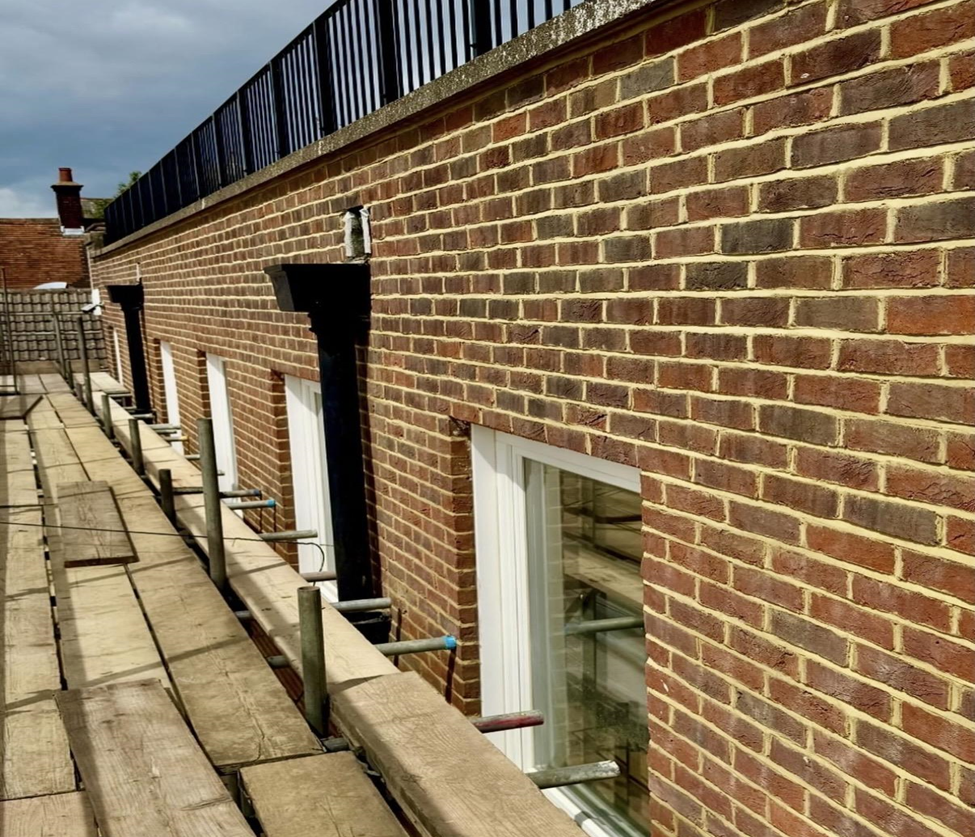
Close-range inspection often reveals inconsistencies in mortar depth and bonding patterns. Areas exposed to prevailing winds or coastal moisture typically show accelerated decay. In St Leonards-on-Sea, salt-laden air can influence surface deterioration, particularly on older façades. Surveyors pay careful attention to parapets, chimneys, and window reveals, where water ingress is most common. Identifying these vulnerabilities early informs the scope of repointing required.
Modern assessment techniques may supplement manual inspection. Drone surveys enable safe evaluation of high or inaccessible elevations without immediate scaffolding. High-resolution imagery captures fine joint details and highlights potential movement cracks. Infrared imaging can also reveal trapped moisture behind brickwork surfaces. These technologies enhance safety while improving diagnostic accuracy.
Structural notes are compiled alongside visual observations. Surveyors record signs of settlement, lintel movement, or bulging brick courses. Measurements of joint width and depth are taken to inform later raking specifications. The final survey report consolidates all findings into a clear technical overview. This document becomes the reference point for subsequent testing, planning, and execution decisions.
Mortar Sampling and Strength Testing Procedures
Once the external survey identifies areas of concern, mortar sampling becomes essential. Removing small, controlled samples allows professionals to analyse the composition and strength of existing material. This step is particularly important in heritage properties where lime-based mortars were historically used. Replacing such mortar with incompatible modern cement mixes can lead to trapped moisture and accelerated brick decay. Sampling prevents inappropriate material substitution.
Laboratory analysis assesses binder type, aggregate grading, and compressive strength. Specialists determine whether the original mortar contains lime, cement, or a hybrid composition. The ratio of binder to aggregate influences flexibility and breathability. Strength testing establishes how the mortar responds to load and environmental stress. These results guide formulation of a compatible replacement mix.
Compatibility extends beyond structural strength. Vapour permeability must be considered to ensure moisture can evaporate naturally through the joints. If new mortar proves harder than surrounding brickwork, damage may transfer to the bricks themselves. Matching compressive strength and porosity preserves the intended performance hierarchy within the wall assembly. Careful laboratory evaluation therefore protects both aesthetics and structural integrity.
Test panels are often prepared before full-scale application. Small trial sections allow assessment of colour, texture, and curing behaviour. Observations from these panels inform final adjustments to the mix design. This methodical process reduces uncertainty during execution. By grounding decisions in measurable data, professionals ensure the repointing work aligns with the building’s original construction characteristics.
Identifying Structural Movement Before Repointing
Before any mortar is removed, professionals must determine whether visible cracking results from simple weathering or from structural movement. Misinterpreting settlement cracks as minor joint decay can lead to ineffective repairs. Repointing alone cannot resolve ongoing movement within a building’s framework. A structured diagnostic approach ensures that underlying causes are addressed appropriately. This stage protects both the contractor and the property owner from premature failure.
Settlement cracks typically follow predictable patterns. They may appear as stepped fractures running diagonally through brick courses or as vertical splits near building corners. These cracks often indicate gradual foundation movement rather than mortar deterioration. Monitoring their width over time helps determine whether the movement is historic or active. If measurements remain stable, repointing may proceed with suitable precautions.
Mortar decay presents differently. Erosion caused by weather exposure generally produces uniform joint recession without disrupting the brick alignment. The surface may appear sandy or powdery, particularly in older lime mortars. In coastal environments such as St Leonards-on-Sea, salt crystallisation can also weaken joint surfaces. Distinguishing between structural movement and surface erosion requires careful observation and, when necessary, structural consultation.
In cases where active movement is detected, remedial measures may precede repointing. These can include addressing drainage issues, reinforcing lintels, or consulting structural engineers for foundation assessment. Only once stability is confirmed should mortar replacement begin. Integrating structural evaluation into the assessment framework ensures that repointing enhances long-term performance rather than concealing unresolved problems.
Matching Mortar Colour and Texture for Seamless Results
A successful repointing project depends not only on structural soundness but also on preserving the visual unity of the original brickwork. Mortar plays a significant role in defining a building’s overall appearance, influencing tone, texture, and shadow lines across the façade. When repairs are poorly matched, even technically competent work can appear intrusive. Differences in colour or finish may disrupt the rhythm of brick courses and diminish architectural character. Achieving seamless results therefore requires both technical accuracy and a refined understanding of aesthetic detail.
Historic properties often exhibit subtle tonal variations shaped by years of weather exposure and natural ageing. Replicating these nuances involves careful selection of aggregates, binders, and where necessary, mineral pigments. Laboratory analysis can identify the original mortar composition, guiding formulation of a compatible replacement. However, visual assessment remains equally important. Sample panels prepared on discreet sections of the wall allow comparison under natural daylight and varying weather conditions, ensuring that the cured mortar blends harmoniously with existing masonry.
Texture is as influential as colour in achieving authenticity. The size and distribution of aggregate particles determine surface roughness and the way light interacts with the joints. Even slight inconsistencies can create noticeable contrast, particularly on larger elevations. Joint profile further shapes the building’s appearance, with flush, recessed, or weather-struck finishes each producing distinct visual effects. Selecting the appropriate profile ensures that new work respects the property’s original detailing and construction era.
Careful mortar matching demonstrates professional oversight and respect for architectural context. In areas with strong visual identity, such as St Leonards-on-Sea, maintaining façade continuity contributes to the cohesion of entire streetscapes. Thoughtfully executed repointing complements neighbouring properties rather than drawing attention to isolated repairs. By combining analytical precision with skilled craftsmanship, specialists deliver outcomes that uphold both structural integrity and heritage value. The result is a restoration that feels integrated, balanced, and true to the building’s character.
Risk Assessment and Site Preparation Planning
Effective risk assessment and site preparation are essential components of any professional repointing project. Before physical work begins, potential hazards must be identified and controlled through structured planning. This early evaluation protects workers, occupants, neighbours, and members of the public. In closely built areas such as St Leonards-on-Sea, limited space increases the importance of organised preparation. Careful coordination ensures that work proceeds safely, efficiently, and with minimal disruption.
- Comprehensive hazard identification prior to setup: Contractors assess site-specific risks before scaffolding is installed or joints are opened. This includes evaluating proximity to public pavements, neighbouring homes, and access routes. Establishing control measures at this stage reduces the likelihood of incidents during active work.
- Strategic planning for access and equipment placement: Narrow streets, shared driveways, and restricted rear entries influence scaffold configuration and material storage decisions. Safe loading limits and stable mixing areas are identified in advance. Protective sheeting may also be specified to contain dust and safeguard adjacent properties.
- Pedestrian management and debris prevention measures: Temporary barriers and visible signage guide foot traffic away from work zones. Secure scaffold boarding and safety netting help prevent falling debris hazards. Open communication with neighbouring residents fosters cooperation and minimises misunderstandings.
- Protection of the building and surrounding features: Window frames, landscaping elements, and nearby surfaces are covered to prevent dust and vibration damage. Electrical fittings and drainage systems are located and safeguarded before work commences. Documented preparation procedures reinforce accountability and professional standards.
Structured site preparation creates a controlled environment in which repointing can be carried out safely. Attention to access, pedestrian safety, and property protection demonstrates responsible practice. When preventative measures are formalised within a risk assessment, expectations remain clear for all parties involved. This disciplined planning reduces avoidable disruption and strengthens operational efficiency. Ultimately, thorough preparation establishes the foundation for a safe and well-managed repointing project.
Step-by-Step Breakdown of the Repointing Process
Repointing follows a structured sequence that demands precision, patience, and technical consistency at every stage. After surveys and material testing confirm the appropriate approach, the physical process begins with the removal of deteriorated mortar. This task requires careful handling to avoid damaging the edges of surrounding bricks, known as arrises. Maintaining clean lines and controlled depth during removal is essential for proper bonding later. Any shortcuts at this stage can undermine the integrity and longevity of the finished work.
Raking out is typically carried out using hand tools or low vibration mechanical equipment designed to minimise stress on the masonry. The goal is to achieve a uniform joint depth, commonly equivalent to at least twice the width of the joint. Achieving this consistency ensures that new mortar has sufficient space to form a secure mechanical bond. Once removal is complete, dust and loose debris must be thoroughly cleared from the joints. Compressed air or light washing may be used to create a clean and stable surface that supports strong adhesion.
The application phase follows promptly after preparation to prevent contamination or moisture imbalance. Fresh mortar is pressed firmly into the joints in controlled layers, reducing the risk of internal voids. Each layer is compacted carefully to ensure complete contact with brick surfaces. Moisture levels are closely monitored, as excessively dry or saturated substrates can weaken bonding performance. Uniform technique across the entire elevation promotes consistent structural behaviour and visual appearance.
Finishing represents the final visible stage of the process. Once the mortar begins to set, joints are tooled to the specified profile, whether flush, recessed, or weather struck. Excess material is gently brushed away to preserve brick clarity and clean lines. Curing conditions are observed to prevent rapid drying that could cause shrinkage cracks. This disciplined progression from removal to finishing reflects professional standards and supports long term durability.
Weather Conditions and Timing Considerations
Weather conditions significantly influence the outcome of any brick repointing project. Mortar relies on stable environmental factors to cure properly and achieve long-term strength. Temperature, humidity, and wind exposure all affect how the material bonds and hardens. Without careful scheduling, even a technically sound mortar mix may underperform. Integrating climate awareness into project planning supports durability and consistent results.
- Temperature management during application: Mortar should not be applied in freezing weather because ice formation can disrupt proper bonding. Extremely hot conditions may accelerate evaporation, leading to shrinkage cracks and weak adhesion. Monitoring forecasts allows contractors to schedule work within safe temperature ranges.
- Controlling moisture levels in masonry: Slight dampness in brickwork can improve bonding by preventing rapid suction from fresh mortar. However, excessive saturation interferes with curing and reduces strength development. Balanced moisture conditions are essential for achieving reliable joint performance.
- Addressing coastal humidity and rainfall risks: In towns such as St Leonards-on-Sea, fluctuating humidity and sea air create additional variables. Sudden rain can compromise newly applied mortar if not properly protected. Temporary coverings shield work areas and maintain stable curing conditions.
- Managing wind exposure during curing: Strong winds can extract moisture too quickly from fresh joints. Rapid drying increases the risk of cracking and surface weakness. Temporary screening helps regulate airflow on exposed elevations.
Careful attention to weather conditions enhances both structural integrity and visual consistency. Timing decisions grounded in environmental awareness reduce the likelihood of premature deterioration. Contractors who plan around climate variables demonstrate professional foresight. Controlled curing ultimately strengthens adhesion and resilience. By respecting the influence of weather, repointing projects achieve dependable long-term performance.
Quality Assurance Checks During Execution
Quality assurance during repointing is a continuous and structured process designed to safeguard both structural performance and visual integrity. Rather than waiting until completion, inspections are integrated into every phase of execution. Regular evaluations confirm that joint preparation, mortar composition, and application techniques align with agreed specifications. This consistent oversight helps identify minor discrepancies before they develop into larger structural concerns. By embedding accountability throughout the workflow, contractors ensure that standards remain consistent from start to finish.
- Verification of Joint Preparation: During the raking stage, supervisors measure joint depth to confirm that sufficient deteriorated mortar has been removed. Depth typically needs to meet established guidelines to create adequate space for secure bonding. If inconsistencies are detected, corrections are made immediately to maintain uniform structural strength across the façade.
- Monitoring Mortar Consistency and Application: Mortar mixes are checked to ensure they match the specified ratios and texture required for the project. Variations in composition can affect curing behaviour, colour stability, and long-term durability. Observing how mortar is compacted into joints ensures full contact with brick surfaces and minimises hidden voids.
- Adhesion and Early Curing Assessment: Once initial curing has occurred, light adhesion checks may be carried out on selected test areas. Gentle probing helps determine whether bonding between mortar and masonry is uniform. Visual inspections also identify surface cracking, shrinkage, or colour irregularities that may require immediate adjustment.
- Documentation and Communication: Supervisors record findings throughout each phase to maintain clear quality control documentation. These records demonstrate compliance with professional standards and relevant building regulations. Regular communication with property owners provides transparency and reinforces trust in the process.
Through systematic monitoring and structured reporting, repointing becomes a carefully managed technical procedure rather than a superficial cosmetic task. Continuous checks enhance durability while preserving architectural appearance. Early identification of minor issues prevents costly corrective work later. Clear documentation supports regulatory compliance and professional accountability. Ultimately, rigorous quality assurance transforms repointing into a disciplined practice that upholds both structural resilience and aesthetic excellence.
Post-Project Inspection and Client Sign-Off
Completion of physical work does not mark the end of a professional repointing project. A structured post-project inspection ensures that all specified standards have been met. This stage verifies workmanship quality, visual consistency, and compliance with the agreed scope. It also provides an opportunity to address any final adjustments before dismantling access equipment. Thorough review protects both contractor and property owner.
The inspection typically begins with a detailed visual walkthrough. Elevations are examined from multiple angles to confirm joint uniformity and finish accuracy. Particular attention is given to corners, window surrounds, and previously vulnerable areas identified during the initial survey. Any minor surface residue is cleaned, and protective coverings are carefully removed. The façade should present a cohesive and balanced appearance.
Technical verification may accompany visual checks. Supervisors confirm that joint depths correspond to specification and that curing conditions were maintained appropriately. Documentation compiled during earlier quality assurance stages is reviewed. This record keeping demonstrates that the project followed a structured framework from assessment through execution. Transparency reinforces professional credibility.
Client sign-off concludes the process. Property owners are invited to review completed areas and discuss maintenance recommendations. Clear communication regarding workmanship guarantees provides reassurance about long-term performance. When carried out methodically, this final stage transforms repointing from a transactional repair into a documented improvement. It confirms that the building’s structural and aesthetic integrity has been responsibly restored.
Conclusion
Professional brick repointing is far more than the visible replacement of worn mortar. Its long-term success depends on a disciplined assessment framework that begins well before tools touch the façade. From comprehensive wall surveys to laboratory mortar analysis, each stage builds upon careful observation and measured decision making. Structured planning reduces uncertainty and safeguards historic and modern properties alike. Without this foundation, even technically skilled work risks underperforming over time.
In areas with diverse architectural character such as St Leonards-on-Sea, the importance of careful evaluation becomes even more pronounced. Period homes constructed with lime mortar demand compatibility and breathability, while later developments may require different technical specifications. Property owners researching repointing companies in St Leonards on Sea benefit from understanding these distinctions. A methodical inspection process distinguishes responsible professionals from those offering superficial repairs. It also ensures compliance with current building standards.
Attention to precision continues throughout execution. Weather awareness, joint depth verification, and consistent quality control protect the durability of newly applied mortar. Post-project inspections and documented sign-off provide accountability and clarity. This structured approach transforms repointing into a measured building intervention rather than a cosmetic refresh.
Local expertise further enhances this framework. As established builders serving Hastings, St Leonards-on-Sea, and the wider East Sussex region, Fortify Construction Ltd applies traditional craftsmanship alongside modern construction knowledge. Their team undertakes brickwork, repointing, and lime mortar restoration with careful attention to detail. By combining technical evaluation with practical experience, projects are delivered to a high professional standard. Ultimately, structured assessment, material compatibility, and disciplined oversight remain the cornerstones of durable brick repointing.
About the Author