
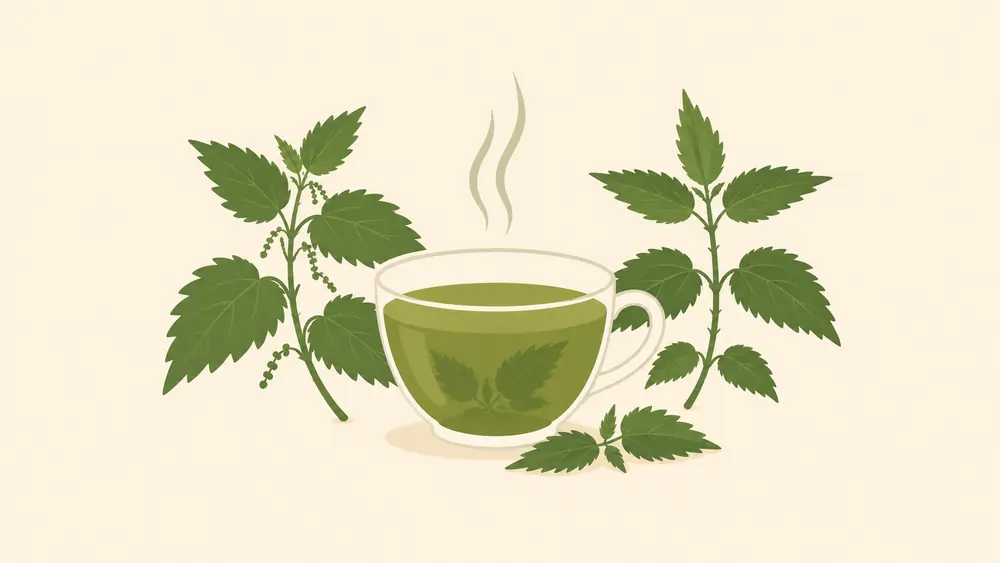
Wood nettle vs stinging nettle tea is a practical question for people who want to understand whether both plants can be used as herbal tea, how they taste, and what safety steps matter before any preparation. Both plants are known as edible greens in traditional and foraging contexts, but identification, sting removal, sourcing, and personal suitability matter more than curiosity.
Wood nettle is commonly known as Laportea canadensis or Canada wood-nettle. Stinging nettle is commonly known as Urtica dioica, though regional forms and related nettles can create label confusion. HerbEra approaches this topic as a careful preparation and sourcing guide: choose verified dried leaf when possible, avoid uncertain wild plants, and never treat nettle tea as a medical product.
This article is for general education. It does not provide medical, foraging, or supplement-use advice. Nettle tea and nettle supplements are not intended to diagnose, treat, cure, or prevent any disease. If you take medication, are pregnant or breastfeeding, have kidney concerns, allergies, or a health condition, speak with a qualified healthcare professional before using nettle products.
Can You Make Tea From Wood Nettle and Stinging Nettle?
Yes, both wood nettle and stinging nettle are discussed as edible nettles, and both can be used in tea-style preparations when correctly identified, properly handled, and safely prepared. The important part is not simply whether a plant is “edible.” The important part is correct identification, clean sourcing, proper drying or heating, and personal safety.
Fresh nettles can sting because of tiny hairs on the plant. Drying, cooking, blanching, or hot-water preparation can neutralize the sting when done properly. However, you should not handle fresh nettles with bare skin or use wild plants that you cannot identify confidently.
For beginners, the safer route is a clearly labeled dried nettle leaf product from a reputable source. This removes most of the field-identification risk and reduces the chance of using the wrong plant.
Wood Nettle vs Stinging Nettle Tea: Quick Comparison
| Feature | Wood Nettle Tea | Stinging Nettle Tea |
|---|---|---|
| Common plant name | Wood nettle, Canada wood-nettle | Stinging nettle, nettle leaf |
| Botanical name | Laportea canadensis | Urtica dioica |
| Typical tea taste | Green, earthy, vegetable-like, mild when dried well | Herbal, grassy, earthy, mineral-like, vegetable-like |
| Beginner availability | Less common commercially | More common as dried nettle leaf tea |
| Sting concern | Fresh plant can sting | Fresh plant can sting |
| Best beginner choice | Only if clearly identified and safely sourced | Verified dried nettle leaf from a reputable source |
What Does Wood Nettle Tea Taste Like?
Wood nettle tea is usually described as green, earthy, and vegetable-like. It may taste softer than expected if the leaves are dried well and not over-brewed. Some people compare nettle-style teas to cooked greens, spinach water, mild herbs, or mineral-rich leafy tea.
Wood nettle is less common in commercial tea than stinging nettle. That means many people encounter it through local plant knowledge or foraging discussions rather than store-bought tea bags.
Because wood nettle requires confident identification, beginners should be careful. Do not collect it from the field unless you know the plant well and understand local look-alikes, clean harvesting locations, and safe preparation.
What Does Stinging Nettle Tea Taste Like?
Stinging nettle tea usually tastes herbal, grassy, earthy, and slightly vegetable-like. Some people notice a mineral-like note. It is not usually sweet or floral. It tastes more like a green leaf infusion than a fruit tea.
Stinging nettle is more widely available as dried nettle leaf. This makes it easier for beginners who want a standard tea experience without identifying plants in the wild.
The taste depends on leaf quality, drying, age, water temperature, steeping time, and the amount of leaf used. A lighter infusion can taste mild and green. A stronger infusion can taste more earthy and dense.
Which Nettle Tea Is Better for Beginners?
Stinging nettle tea is usually better for beginners because dried stinging nettle leaf is easier to find from reputable suppliers. It also has more common label recognition, more product availability, and more preparation guidance.
Wood nettle tea may interest experienced plant users, but it is less beginner-friendly because it is less common commercially and requires stronger identification confidence if gathered locally.
The easiest beginner rule is simple: choose verified dried nettle leaf before wild-harvesting. A reputable dried product is usually safer than a field guess.
Does Drying or Heating Remove the Sting?
Drying, cooking, blanching, or hot-water preparation can neutralize the sting of nettles when done properly. The sting comes from fine hairs on the fresh plant. Once the plant is properly dried or cooked, the tea material should not sting in the same way fresh leaves do.
Still, do not handle fresh nettles casually. Wear gloves and long sleeves if you work with fresh plants. Avoid touching your face, eyes, or sensitive skin after contact with fresh material.
If you buy dried nettle leaf, it should already be processed for tea use. Check the label and follow the preparation instructions from the product.
Which Plant Parts Are Usually Used for Tea?
Nettle tea usually uses leaves or aerial parts, depending on the product and tradition. Commercial dried nettle leaf products commonly use the leaf. Some herbal products may use root, seed, or whole herb, but those are not the same as leaf tea.
This distinction matters. Nettle leaf, nettle root, and nettle seed are different plant materials and may be used in different product categories. Do not assume they are interchangeable.
For a simple tea routine, look for dried nettle leaf. If the label says root, seed, or extract, that product is different from a basic leaf tea.
How to Prepare Nettle Tea Safely as a Beginner
The safest beginner approach is to use a reputable dried nettle leaf product and follow the label instructions. This avoids wild plant identification mistakes and gives you a more predictable tea material.
If you use fresh nettles, do not handle them with bare skin. Fresh wood nettle and fresh stinging nettle can both irritate the skin. Use gloves, clean tools, and verified identification. Avoid plants growing near roadsides, polluted water, sprayed areas, or contaminated soil.
Do not prepare tea from any wild plant unless you are completely confident in identification and safety. “Looks like nettle” is not enough.
Tea Prep Comparison
| Prep Factor | Wood Nettle | Stinging Nettle | Beginner Note |
|---|---|---|---|
| Fresh handling | Gloves needed | Gloves needed | Both can sting before processing |
| Dried leaf use | Possible but less common commercially | Common and widely available | Dried stinging nettle leaf is easier to source |
| Sting neutralization | Drying or heating helps | Drying or heating helps | Do not test fresh sting by touch |
| Taste control | Use milder infusion | Use milder infusion | Shorter steeping can keep taste lighter |
| Best beginner route | Only with verified source | Verified dried nettle leaf | Avoid uncertain field collection |
How to Make Nettle Tea Taste Better
Nettle tea can taste earthy and green. If the flavor feels too strong, make a lighter infusion, use less leaf, or reduce steeping time according to the product instructions.
Flavor pairings can help. Lemon, mint, ginger, cinnamon, honey, or mild green herbs can soften the vegetable-like taste. Some people prefer nettle tea blended with other caffeine-free herbs.
Do not make the tea stronger just because you assume stronger is better. A mild cup that you enjoy is more practical than an intense cup you avoid.
Can You Mix Wood Nettle and Stinging Nettle in Tea?
You should not mix wood nettle and stinging nettle unless both are correctly identified, safely processed, and appropriate for your situation. For beginners, mixing wild plants adds unnecessary complexity.
If you buy a commercial blend, read the label carefully. The product should identify the plant material clearly. If it only says “nettle,” you may not know whether it refers to Urtica dioica, another Urtica species, or a broader nettle-style ingredient.
HerbEra takes a conservative editorial stance on nettle tea: simple, verified, and label-led is better than mixing uncertain plants for a stronger herbal experience.
Foraging Caution: Identification Comes Before Tea
Wood nettle and stinging nettle are not the same plant. Wood nettle usually has alternate leaves. Stinging nettle usually has opposite leaves. This difference helps with identification, but it is not the only clue you should use.
Wood nettle often grows in rich, moist woods, floodplains, and shaded streamside areas. Stinging nettle often grows in moist, disturbed, nutrient-rich soil, field edges, gardens, roadsides, and waste places.
Never collect plants from polluted or sprayed locations. Never use a plant if you are unsure. Never rely on one app photo or one online image to decide whether something is safe to drink.
Who Should Be Careful With Nettle Tea?
Some people should speak with a qualified healthcare professional before drinking nettle tea. This includes people who take medication, especially products related to blood pressure, blood sugar, blood thinning, fluid balance, or kidney function.
Pregnant and breastfeeding people should also ask before using nettle tea. Safety guidance can vary, and personal medical context matters.
People with kidney concerns, allergies, or complex supplement routines should be cautious. Natural tea does not automatically mean risk-free.
What Nettle Tea Should Not Be Used For
Nettle tea should not be used as a substitute for medical care. It should not be positioned as a solution for allergies, blood sugar, blood pressure, inflammation, urinary problems, or any diagnosed condition.
Those claims may appear in some online discussions, but this article focuses on tea identification, taste, preparation, and safety. A safer wellness approach avoids disease claims and keeps the routine modest.
If symptoms are severe, unusual, persistent, or worsening, seek appropriate medical care instead of relying on an herbal tea.
Wood Nettle vs Stinging Nettle Tea Checklist
Use this checklist before making or buying nettle tea. The goal is to avoid identification mistakes, reduce sting risk, and choose a beginner-friendly option. A safe tea routine starts before the cup is brewed.
Confirm the Plant Name
Look for Laportea canadensis for wood nettle or Urtica dioica for stinging nettle. Avoid vague labels when you need species clarity.
Choose Dried Leaf First
Beginners should choose verified dried nettle leaf from a reputable source. This is safer than guessing with fresh wild plants.
Avoid Bare-Skin Handling
Fresh wood nettle and stinging nettle can both sting. Use gloves and avoid touching your face after handling.
Use Properly Processed Material
Drying, cooking, or hot-water preparation can neutralize sting when done properly. Do not use fresh leaves casually.
Start With a Mild Cup
A lighter infusion is easier for beginners. You can adjust taste later if the product label allows it.
Check Personal Safety Factors
Ask a qualified professional if you take medication, are pregnant or breastfeeding, have kidney concerns, or manage a health condition.
Do Not Use Unknown Plants
If you cannot identify the plant confidently, do not collect, dry, brew, or consume it.
Common Mistakes to Avoid
Assuming All Nettles Are the Same
Wood nettle and stinging nettle are different plants. The word “nettle” does not always tell you the species.
Touching Fresh Nettles to Test Them
Do not test the sting with bare skin. Both plants can irritate the skin.
Using Roadside Plants for Tea
Plants near roads, sprayed areas, polluted water, or contaminated soil are poor choices for tea material.
Making Tea From Uncertain Identification
Do not brew a plant because it resembles an online image. Use reliable local identification.
Expecting a Sweet Herbal Tea
Nettle tea usually tastes green, earthy, grassy, or vegetable-like. It is not a fruit tea.
FAQ
Can you make tea from wood nettle?
Yes, wood nettle can be used in tea-style preparations when correctly identified, safely sourced, and properly dried or heated.
Can you make tea from stinging nettle?
Yes, dried stinging nettle leaf is commonly used for tea. Beginners should choose reputable dried leaf products.
Does nettle tea still sting?
Proper drying, cooking, or hot-water preparation can neutralize the sting. Fresh nettles can still sting before processing.
What does wood nettle tea taste like?
Wood nettle tea usually tastes green, earthy, mild, and vegetable-like when prepared from properly dried leaves.
What does stinging nettle tea taste like?
Stinging nettle tea usually tastes herbal, grassy, earthy, mineral-like, and vegetable-like.
Which nettle tea is better for beginners?
Verified dried stinging nettle leaf is usually easier for beginners because it is more commonly available and clearly labeled.
Can I use fresh nettles for tea?
Only if the plant is correctly identified and safely handled. Fresh nettles can sting, so beginners should use dried leaf instead.
What part of nettle is used for tea?
Nettle leaf is commonly used for tea. Root, seed, and extract products are different and should not be treated as the same thing.
Who should ask before drinking nettle tea?
People taking medication, pregnant or breastfeeding people, and those with kidney concerns, allergies, or health conditions should ask a qualified professional first.
Glossary
Wood Nettle
A common name for Laportea canadensis, a stinging plant often found in moist woods and floodplains.
Stinging Nettle
A common name often used for Urtica dioica, a nettle species commonly sold as dried nettle leaf.
Laportea canadensis
The botanical name for Canada wood-nettle or wood nettle.
Urtica dioica
The botanical name commonly associated with stinging nettle.
Dried Nettle Leaf
Nettle leaf that has been dried for tea or herbal product use.
Stinging Hairs
Fine plant hairs that can irritate the skin when fresh nettles are touched.
Aerial Parts
The above-ground parts of a plant, such as leaves and stems.
Infusion
A tea-style preparation made by steeping plant material in hot water.
Foraging
The practice of gathering wild plants for food or other uses. It requires careful identification and safety knowledge.
Conclusion
Wood nettle and stinging nettle can both fit tea-style use when correctly identified and properly processed, but beginners should choose verified dried nettle leaf instead of wild guessing. Taste is usually green, earthy, and vegetable-like, while safety starts with plant identification, sting handling, and personal health cautions.
Sources
Stinging nettle food preparation and blanching guidance, Oregon State University Extension — extension.oregonstate.edu/catalog/em-9373-wild-edibles-stinging-nettle
Wood nettle identification, habitat, and edible-use context, Missouri Department of Conservation Field Guide — mdc.mo.gov/discover-nature/field-guide/wood-nettle-stinging-nettle
Canada wood-nettle identification, leaf arrangement, and habitat, Go Botany / Native Plant Trust — gobotany.nativeplanttrust.org/species/laportea/canadensis
Stinging nettle identification and North American subspecies notes, Go Botany / Native Plant Trust — gobotany.nativeplanttrust.org/species/urtica/dioica
Stinging nettle safety, interactions, and supplement cautions, WebMD — webmd.com/vitamins/ai/ingredientmono-664/stinging-nettle
Stinging nettle lactation and safety discussion, LactMed / NCBI Bookshelf — ncbi.nlm.nih.gov/books/NBK501777
About the Author