
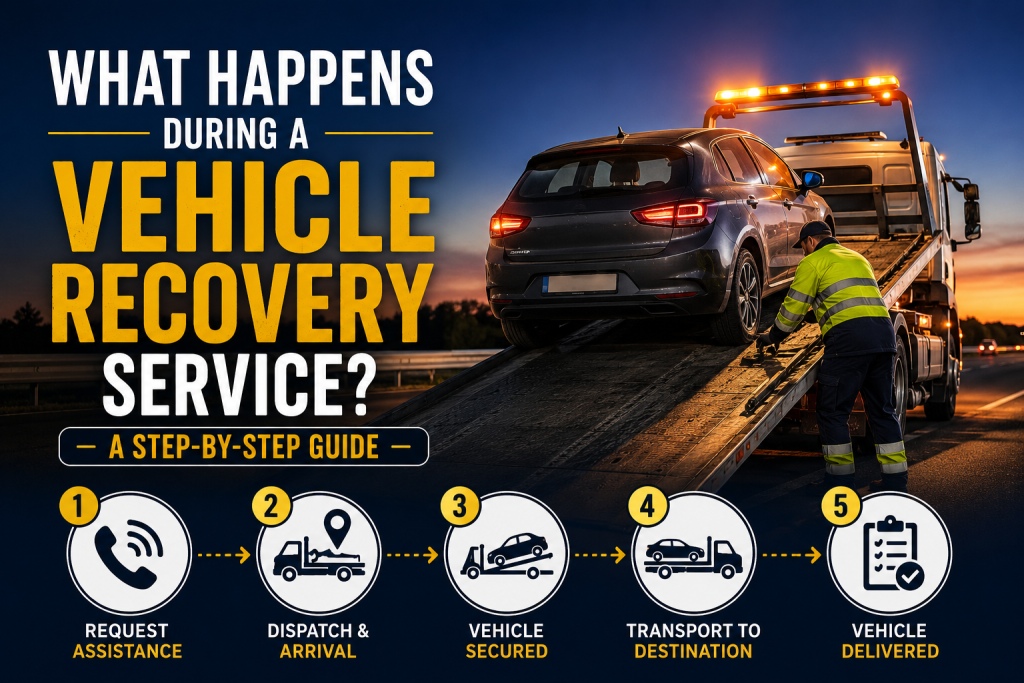
Breaking down is never convenient. Whether your car will not start outside your home, you have a flat tyre on the motorway, or your vehicle has suddenly stopped working during a journey, it can be a stressful experience.
The good news is that a professional vehicle recovery service is available to help. If you have never had to call for recovery before, you might wonder what actually happens once you have made that call.
In this guide, we explain the vehicle recovery process step by step, so you know exactly what to expect.
Step 1: Calling for Vehicle Recovery
The process begins with a phone call.
When you contact a recovery company, they will ask a few questions to understand the situation and send the appropriate assistance. This usually includes the following:
- Your location
- Your vehicle’s make and model
- The nature of the problem
- Whether you are in a safe place
- Where would you like the vehicle taken if recovery is needed
Providing clear information helps the recovery team reach you as quickly as possible and ensures they arrive with the correct equipment.
Step 2: Help Is Dispatched
Once the details have been taken, the recovery company will arrange for a technician or recovery driver to attend.
Depending on the issue, they may send the following:
- A roadside assistance vehicle
- A recovery truck
- A flatbed transporter
- Specialist recovery equipment for larger vehicles
You will usually be given an estimated arrival time, so you know when help is on the way.
Step 3: Assessing the Vehicle
When the recovery operator arrives, the first task is to assess the vehicle and identify the problem.
In many cases, the issue is something relatively straightforward, such as:
- A flat battery
- A puncture
- Running out of fuel
- Minor electrical faults
The technician will carry out checks to determine whether the vehicle can be repaired safely at the roadside.
Step 4: Roadside Repairs Where Possible
Not every breakdown requires recovery.
If the issue can be fixed quickly and safely, the technician will aim to get you moving again immediately.
Common roadside fixes include:
- Jump-starting a flat battery
- Replacing a damaged wheel
- Providing emergency fuel
- Carrying out basic mechanical adjustments
Getting you back on the road without the need for towing is often the quickest and most convenient solution.
Step 5: Preparing the Vehicle for Recovery
If the fault cannot be repaired at the roadside, the vehicle will need to be transported to a garage, your home address, or another destination of your choice.
Before loading the vehicle, the recovery operator will ensure everything is secure and safe.
This includes checking for:
- Loose parts
- Fluid leaks
- Steering or braking issues
- Any damage that could affect transportation
The aim is to prevent any further damage while the vehicle is being moved.
Step 6: Loading the Vehicle
Once everything is ready, the vehicle is carefully loaded onto the recovery truck.
Professional recovery operators use specialist equipment, including winches and securing straps, to ensure the vehicle remains stable throughout the journey.
Whether it is a small hatchback, family car, van, or motorbike, proper loading procedures help protect your vehicle from additional damage.
Step 7: Transporting the Vehicle
After loading, the vehicle is transported to the agreed destination.
This could be:
- A local garage
- A main dealer
- Your home
- A repair workshop
- Another safe location
Throughout the journey, the vehicle remains securely fastened to ensure it arrives safely.
Step 8: Vehicle Delivery and Handover
Once at the destination, the recovery operator will carefully unload the vehicle and complete the handover.
If they have identified the likely cause of the breakdown, they may also provide useful information to help your mechanic diagnose the problem more quickly.
At this stage, the recovery process is complete, and your vehicle can be inspected and repaired.
Why Professional Vehicle Recovery Matters
When your vehicle breaks down, safety should always come first.
Professional recovery companies have the training, experience, and equipment needed to deal with breakdowns safely and efficiently, whether you are stranded on a residential road, a country lane, or a busy motorway.
Using a trusted recovery service offers several benefits:
- Fast response times
- Safe vehicle transportation
- Experienced recovery operators
- 24-hour assistance
- Reduced risk of further vehicle damage
Most importantly, it gives you peace of mind during what can often be a stressful situation.
Common Reasons Drivers Need Recovery Services
Vehicle recovery companies attend to a wide range of incidents every day, including the following:
- Flat batteries
- Engine failures
- Clutch problems
- Overheating issues
- Punctures and tyre damage
- Electrical faults
- Road traffic accidents
- Fuel-related problems
No matter the cause, professional recovery services are designed to get you and your vehicle to safety as quickly as possible.
Final Thoughts
A vehicle breakdown can occur when you least expect it, but understanding what happens during a recovery service can make the experience much less daunting. From the moment you call for assistance to the safe delivery of your vehicle, every step is designed to get you back on the road with minimal stress. Whether it is a minor roadside issue or a more serious mechanical fault, a professional vehicle recovery service offers the support, expertise, and reassurance you need when things do not go as planned.
About the Author